Marc Marquez won the 2026 Czech Grand Prix at Brno after a late fight with Ai Ogura, while Francesco Bagnaia completed the podium and Pedro Acosta retired with a late technical problem. The result is confirmed by MotoGP’s official Brno race report.
Bagnaia controlled the opening phase after taking the lead from the front group, but Marquez stayed close enough to apply pressure as the race developed. Ogura also remained in the fight, turning the Czech round into a three-rider contest rather than the Acosta-led result previously reported here.
Marquez turns pressure into victory
The decisive phase arrived when Marquez began to close on Bagnaia. The Ducati rider managed the gap before making his move, and Ogura stayed within reach as the leading trio stretched clear of the rest of the field. The battle was shaped by pace and tyre management rather than a runaway opening lap.
Ogura’s performance was a major part of the story. The Trackhouse rider challenged at the front and finished just short of a first MotoGP victory, giving the Japanese rider one of his strongest weekends of the season. Bagnaia’s podium kept him in the championship fight, but the result also showed how quickly the order can change across a full race distance.
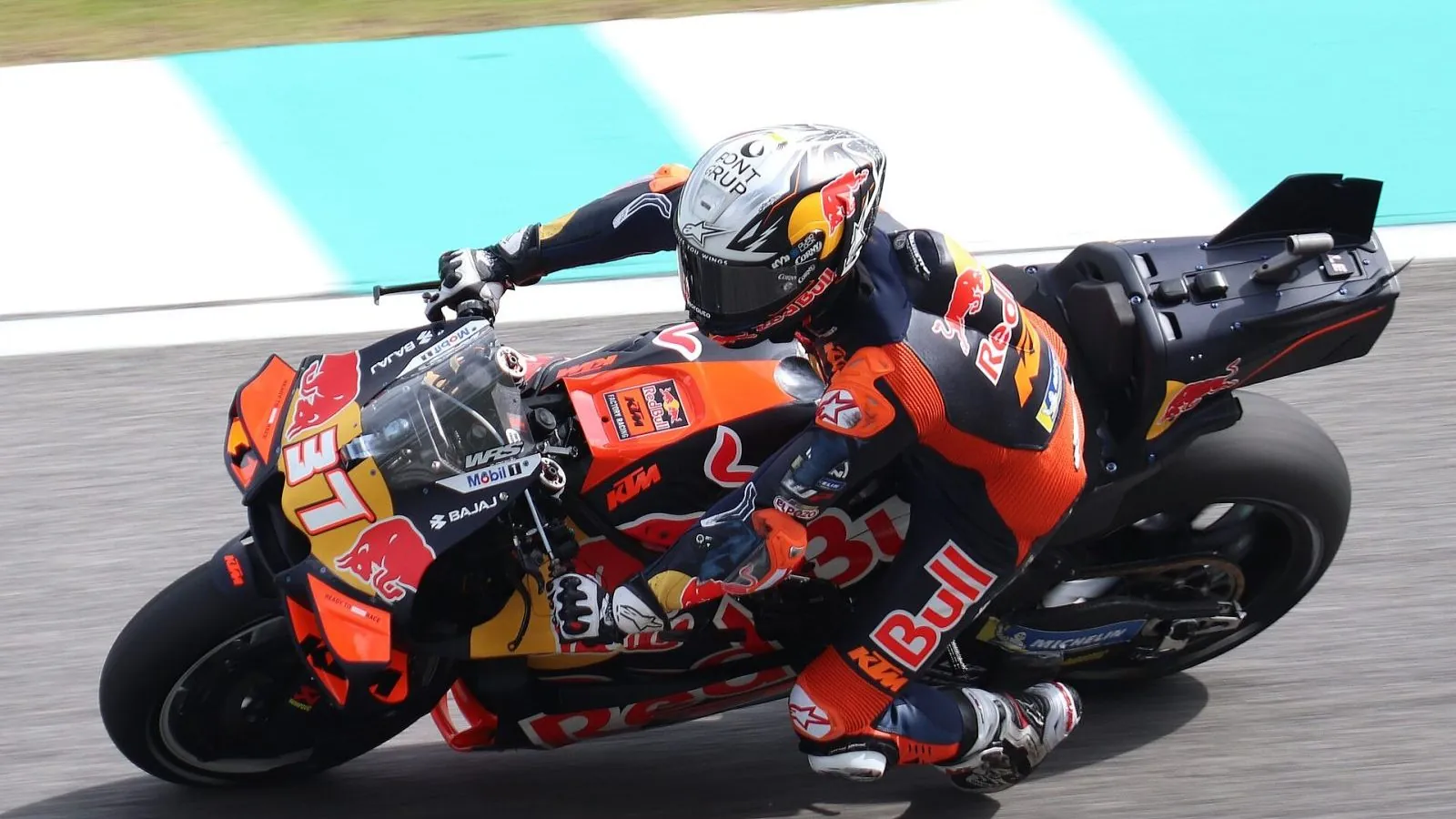
Acosta’s costly late problem
Acosta had been part of the leading conversation before a race-ending issue removed him from contention in the closing stages. That retirement changed the points picture and denied KTM the result its pace had suggested was possible. It also underlined the difference between qualifying speed and carrying the package through the final laps.
Marquez leaves Brno with another statement win, while Ogura and Bagnaia take evidence that the front of the grid remains closely matched. For the next round, the questions are whether Ducati can protect its race pace and whether KTM can turn a strong weekend into a complete result.
What the Brno result changes
The Brno classification gives each rider a different kind of evidence. Marquez has converted a close front-group fight into a win, Ogura has shown that he can stay in the leading battle to the flag, and Bagnaia has taken a podium from a race that never became a comfortable procession. Those are distinct signals and should not be collapsed into a single form label.
Acosta’s late retirement matters for a different reason. The pace that puts a rider in the winning conversation still has to survive the final laps, and a race-ending problem removes the chance to turn that pace into points. The result therefore rewards a review of reliability and race management alongside qualifying speed.
The useful next step is to compare the Brno result with the next official classification rather than assume that one circuit settles the season. A repeatable read should track the front group, tyre performance, late-race reliability, and the gap between a rider’s best lap and his completed race result.
That distinction is also why the result needed a correction. A wrong winner changes the meaning of every later paragraph, from the podium order to the rider-market discussion. The revised version keeps the verified result at the top and treats the broader championship interpretation as analysis rather than established fact.