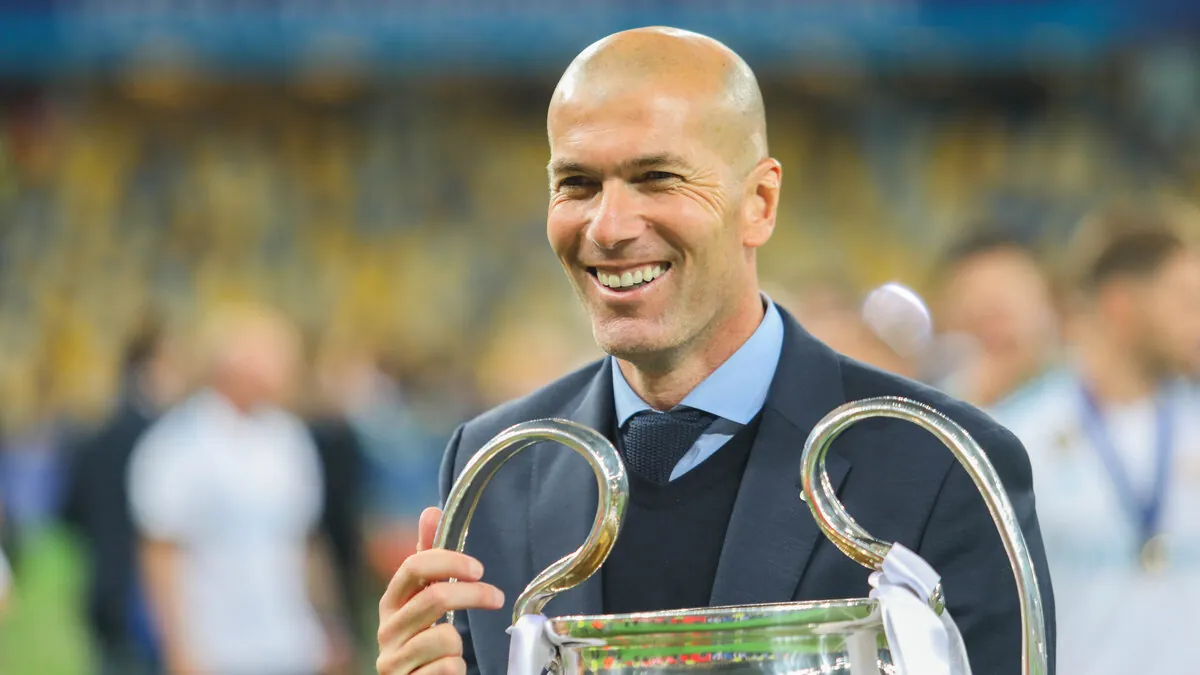
The French Football Federation has appointed Zinedine Zidane as head coach of the men's national team, presenting the new coach during an official federation briefing on Tuesday. The former France international succeeds Didier Deschamps after a 14-year tenure and takes charge at the start of a new cycle for Les Bleus.
This is a major change in authority rather than a clean-sheet rebuild. Zidane inherits an established international squad, but he must now decide which parts of the Deschamps era to retain and where his own leadership needs to be visible. His first selections and the roles he gives senior players will provide the earliest evidence.
A national-team role with rare weight
Zidane arrives with a connection to the shirt that few coaches could match. He was a central figure in France's 1998 World Cup victory and their European Championship win two years later, achievements that established him as one of the defining players in the country's football history.
His coaching reputation was built at Real Madrid. The club's official account of Zidane's career records three Champions League titles as a coach, all won consecutively, alongside two Spanish league championships. That record demonstrated an ability to manage elite players and the pressure surrounding knockout football.
International management presents a different test. Training time is limited, competitive windows arrive quickly, and a coach has fewer opportunities to solve problems through recruitment. Zidane's standing may give him immediate authority, but reputation alone cannot determine how France will play or which combinations will survive the transition.
Fourteen years of continuity now ends
Deschamps had led France since 2012, making this handover unusually significant. Many players in the current pool have known no other senior national-team coach, while the federation has operated with a stable voice through several tournament cycles.
The change follows France's final match of the 2026 World Cup cycle. Zidane therefore begins with an immediate balance to strike: acknowledge what kept France competitive under Deschamps without allowing continuity to blur responsibility for the next phase.
That distinction matters because the appointment will naturally create expectations of an instant stylistic transformation. There is not yet enough evidence to define a "Zidane France" on the pitch. His Madrid teams were built for club competition, with daily contact and a transfer market behind them. The national-team version will have to emerge from short camps and the players available in each window.
Selection will define the first phase
The first squad announcement should be more revealing than broad promises. It will show how Zidane views the balance between experience and renewal, which positions he considers settled, and where he believes France needs a different answer. Just as important will be the leadership group around him, because international coaches rely heavily on staff work between camps.
For France, the attraction is clear: the federation has chosen a coach with elite club honours, first-hand knowledge of the national shirt, and experience handling exceptional individual talent. The open question is how quickly those strengths translate to the compressed rhythm of international football.
Zidane's appointment settles the succession debate, but it does not settle France's direction. That will become clearer through decisions rather than symbolism, beginning with the names he selects and the responsibilities he assigns when the team next gathers.