The FIA has rejected claims that it failed to anticipate the problems that have marked the first half of Formula 1’s 2026 season, saying it flagged the issues years in advance and then watched its attempts to fix them blocked by the sport’s own governance. The account of those comments published by The Race puts the governing body’s defence in the words of its single-seater director, Nikolas Tombazis.
Tombazis said the FIA knew the potential pitfalls of the new regulations well before the cars raced and tried to make adjustments in the two years leading into the season. “We did anticipate a lot of these things they have complained about in the two years before the launch of the season, and we did try to make some adjustments,” he said. “But we failed with the governance that was in place.”
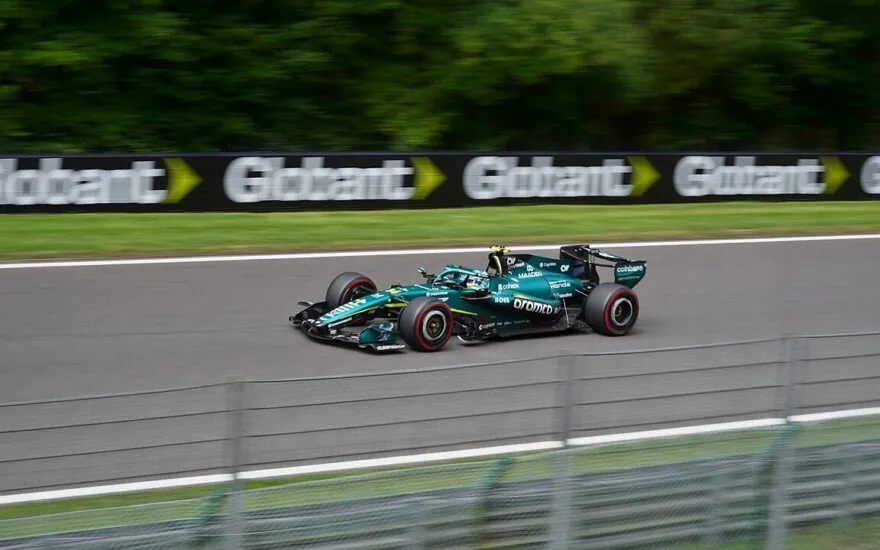
The remarks are the FIA’s response to the sharpest criticism of the season, which followed the Belgian Grand Prix at Spa-Francorchamps on 19 July. Drivers described running behind other cars as unrewarding and complained that energy-limited running had taken the edge off a classic circuit. Kimi Antonelli won that race for Mercedes. Carlos Sainz, in his role as Grand Prix Drivers’ Association director, said anyone who had seen the early simulations without raising concerns needed to review the process, while Lewis Hamilton said the people who made the decisions behind the current cars had kept their jobs.
The veto built into the rulebook
Tombazis’s central claim is that the FIA’s hands were tied by the agreement that governs how the 2026 regulations can change. A Power Unit Advisory Committee was created to protect the interests of the four existing manufacturers and the newcomers joining the formula, and major adjustments required the backing of the FIA, Formula One Management and four of the five manufacturers. “Quite simply, four of them did not agree during the years when we discussed adjustments,” he said.
He argued that the framework was necessary to stop a manufacturer from opting out of the financial and operational rules it did not like, but accepted that it limited the FIA’s room to act unilaterally. The Race also reported that a last-ditch proposal in early 2026 to cut maximum energy deployment in races to 200kW was dismissed.
Change arrived only after racing began
The consequence, Tombazis said, was that fixes had to wait until the problems were visible on track. F1 introduced emergency energy-management measures from the Miami Grand Prix in May, and the manufacturers have since agreed a roadmap that moves the power units from their nominal 50/50 split between combustion and battery power towards 60/40 by 2028. “I think it’s a bit of a shame that we had to wait until then,” he said. “I think we could have ideally done that a couple of years before.”
The episode has become the defining governance argument of the season’s first half. Formula 1’s own mid-season review frames the campaign around Antonelli’s emergence as championship leader and a development war behind him, with three teams winning across the five races before the break.
A defence of the spectacle
Tombazis pushed back on the idea that the spectacle has suffered, noting that Mercedes has done most of the winning but that races have stayed close and frequently been decided late. “While we do have a clear advantage for one manufacturer, in the past when we’ve had this at an early start of regulations it has been very processional,” he said. “And now I think, despite the fact Mercedes has been doing most of the winning, the races have nonetheless been quite exciting.”
The exchange leaves the debate unresolved as the paddock shuts down for the summer break. The season resumes at Zandvoort on 23 August with the rules themselves unchanged, which means the second half will show whether the cars’ critics or their defenders have the stronger case.