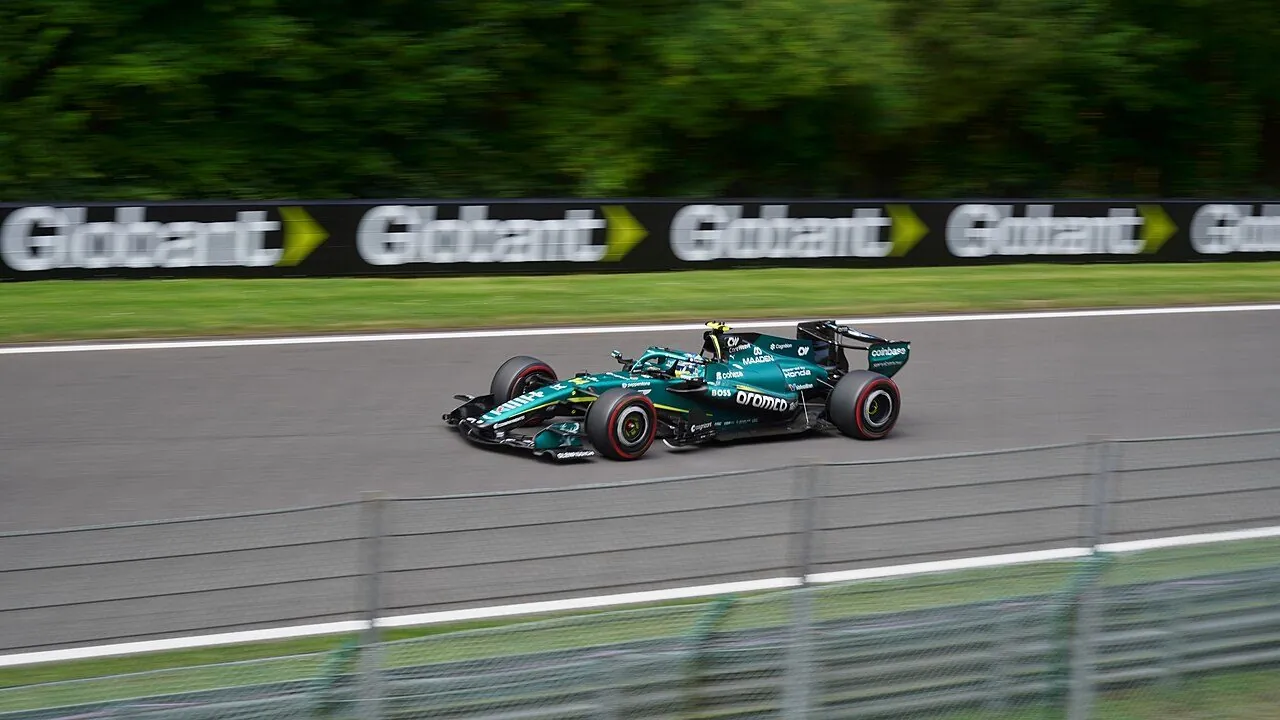
Fernando Alonso’s Azerbaijan Grand Prix penalty reached 30 grid places on Friday after FIA stewards added a five-place sanction for using a seventh energy store in Free Practice 3. The new ruling adds to Alonso’s existing 25-place drop for other power-unit components. The FIA decision on the additional energy store records the latest change.
The stewards issued the extra penalty after the FIA technical delegate listed the energy store as Alonso’s seventh of the season, above the allocation of three. The delegate’s power-unit report identifies the season total and states that it exceeds the allowed number. The decision concerns a grid position, not an added time penalty during the race.
How Alonso’s penalty reached 30 places
Alonso’s first sanction came in a separate Thursday ruling after new power-unit elements were used in Free Practice 1. FIA Document 20 records his fifth internal-combustion engine, fifth turbocharger and ninth power-unit ancillary component. The stewards assigned those elements penalties of 10, 10 and five grid places, producing the original 25-place total. Formula 1’s penalty guide explains that overages accumulate when several elements are changed at one event. Friday’s new energy store added another five, taking the combined sanction to 30.
The two rulings concern different component types. Alonso’s energy-store count is separate from the engine, turbocharger and ancillary-component entries in the earlier decision. The FIA paperwork identifies the components and the resulting penalties, but does not state why Aston Martin selected them. The documents therefore do not establish a reliability failure or a specific expected performance gain.
Lance Stroll has a separate 20-place penalty. FIA Document 21 lists his sixth turbocharger, seventh energy store, sixth control electronics unit and eighth ancillary component. The stewards set a five-place drop for each listed element, adding the four sanctions together. Stroll’s total is independent of Alonso’s; the documents do not assign a single team-wide penalty.
How the back-row penalties affect qualifying
Both totals exceed 15 places. Under the FIA allocation cited in the steward decisions, Alonso and Stroll must be classified in qualifying before their grid positions are set, under Article B2.5.4(b)(iv). The F1 penalty guide explains that a driver whose sanction exceeds 15 places starts behind the other classified drivers. Qualifying cannot erase either sanction, but it remains part of the process used to set the final order.
The distinction matters because these are grid-place penalties, not suspensions or disqualifications. The rulings do not remove either Aston Martin from qualifying or the race. Instead, each driver carries a separate starting-position penalty into Saturday. Alonso’s 30-place figure should not be read as a 30-second addition to his race time, and Stroll’s four component entries do not combine with Alonso’s entries.
The 2026 Azerbaijan Grand Prix has now concluded. Formula 1’s official race result lists Fernando Alonso as a DNF after 20 laps and Lance Stroll as a DNF after seven. The result does not state why either driver retired.
Bettista has previously covered the technical background in its report on Honda’s revised power unit completing its first Aston Martin track run and Honda’s change in leadership for its F1 power-unit programme. Those reports provide broader programme context; neither gives a reason for the component choices recorded in Baku. The confirmed update for this weekend is narrower: Alonso’s penalty now stands at 30 places, while Stroll faces 20.