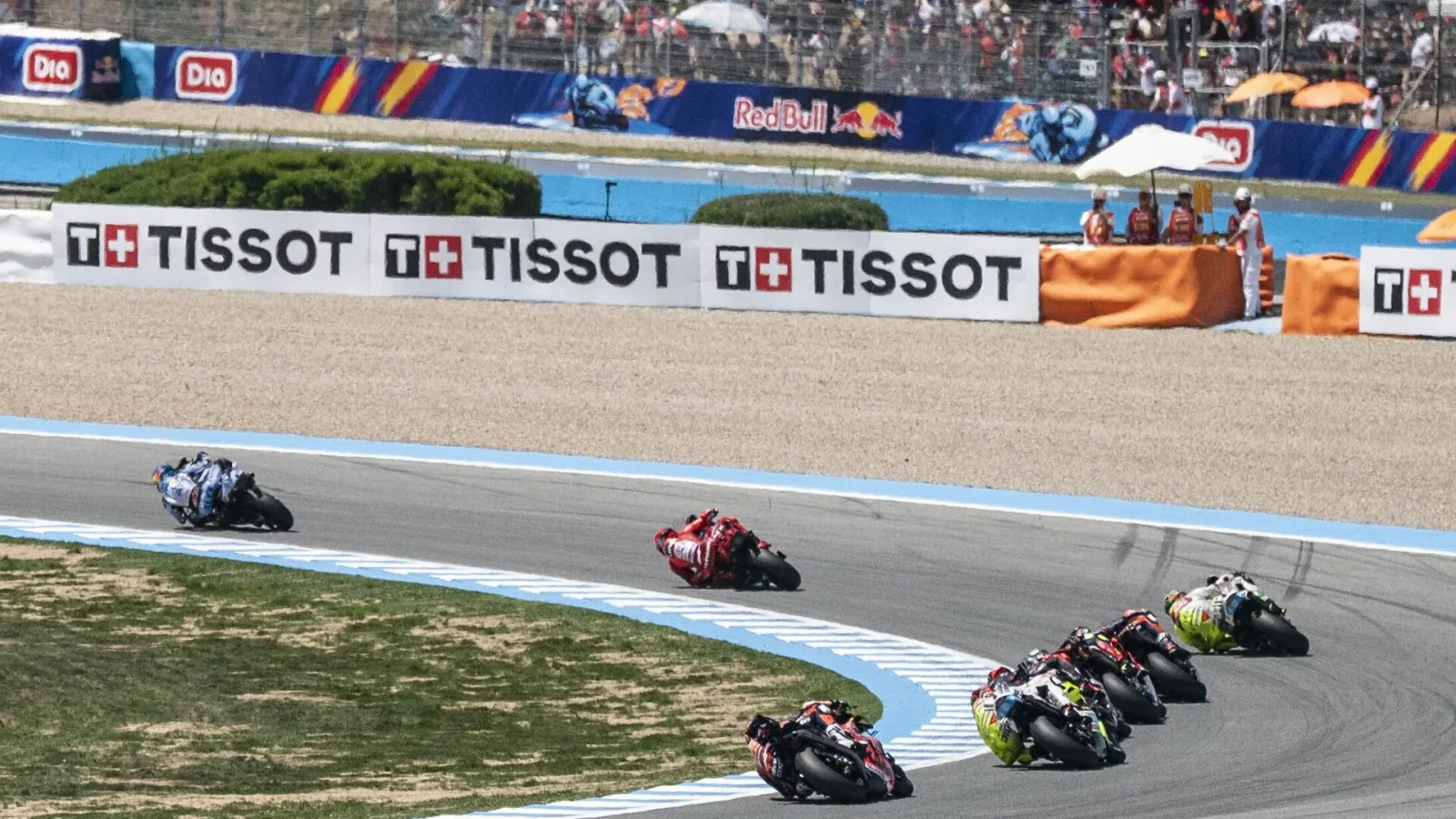
Four completed MotoGP weekends are enough to establish the first analysis pattern of 2026: Saturday headlines are still not the same thing as Sunday control. Thailand, Brazil, Austin, and Jerez pushed riders into different setups and track conditions, yet the clearest recurring signal was the same one Bettista will want to track every week from here: which riders can still manage the rear tire and exit drive when the race stops behaving like a qualifying lap.
The completed opening-round classifications are checked against the official MotoGP race-results service.
That makes MotoGP a natural fit for a repeatable weekend template. Start with qualifying and sprint noise, compare it against full-race stability, then decide whether the next field is rewarding genuine Sunday pace or simply paying for the most visible name from the last session people remember.
The repeatable weekend template
• Grid headline: Who grabbed pole, and did the field start paying for a one-lap peak that may not survive race distance?
• Sprint translation: Did the sprint confirm real pace, or did it flatter an aggressive setup that would fade on Sunday?
• Race management: Rear-tire life, braking stability, and final-third race control decide more than a clean Saturday ever will.
• Next-board carryover: The next read is where the overvalueion lives, especially after a dramatic pole lap or a high-visibility sprint result.
Bezzecchi and Aprilia set the early standard
The opening month made Aprilia and Marco Bezzecchi the cleanest Sunday package on the board. Through Thailand, Brazil, and the United States, the strongest through-line was not a single magic setup; it was repeatable race control. By the end of Jerez, Bezzecchi sat on 101 points and Aprilia led the constructors on 125.
That matters for readers because it is exactly the kind of pattern the field is slow to read cleanly at first. The public often reacts fastest to pole position or to the most explosive sprint run, while the smarter angle is usually the rider who still looks composed when grip falls away and the race becomes about survival as much as pace.
Brazil and Austin rewarded Sunday discipline
The second and third weekends reinforced that principle. Even when the grid order and the weekend chatter moved around, the race result kept rewarding the riders and bikes that stayed calm over full distance. That is the kind of signal readers should trust most in MotoGP because the field repeatedly overpays for immediacy.
A rider can look unbeatable for one lap and still become vulnerable once tire wear, dirty air, and late-race mistakes enter the equation. Bettista's strength comes from evaluation the whole race, not the highlight reel.
Jerez changed the headline, not the lesson
Jerez gave the opening block a different winner and that was useful. Marc Márquez owned the pole-position headline, but Álex Márquez and Gresini converted the Sunday result. That is exactly the sort of weekend that punishes readers who overvalue the most visible pre-race cue and ignore the deeper race profile underneath.
It also kept the season honest. Bezzecchi and Aprilia still look like the early benchmark, but Jerez reminded the field that Ducati depth can still flip a weekend quickly when the race script shifts. That combination creates the right kind of uncertainty for disciplined readers: enough confidence to trust the core pattern, but enough variance to keep chasing overpraised favorites dangerous.
What to carry into Le Mans and beyond
The opening block through Jerez says the same thing every good MotoGP analysis process should say: separate spectacle from repeatability. Bezzecchi leads Jorge Martín 101 to 90, Ducati still has enough depth to punish lazy reads, and the postponed Qatar round means the early calendar has already forced teams to adapt in a less linear way than many preseason models assumed.
The next board should be attacked with restraint. Read the rider, bike, and race-length setup, not just the last dramatic session. That is the weekly template worth keeping.
That makes MotoGP a natural fit for a repeatable weekend template. Start with qualifying and sprint noise, compare it against full-race stability, then decide whether.